
 blog
blog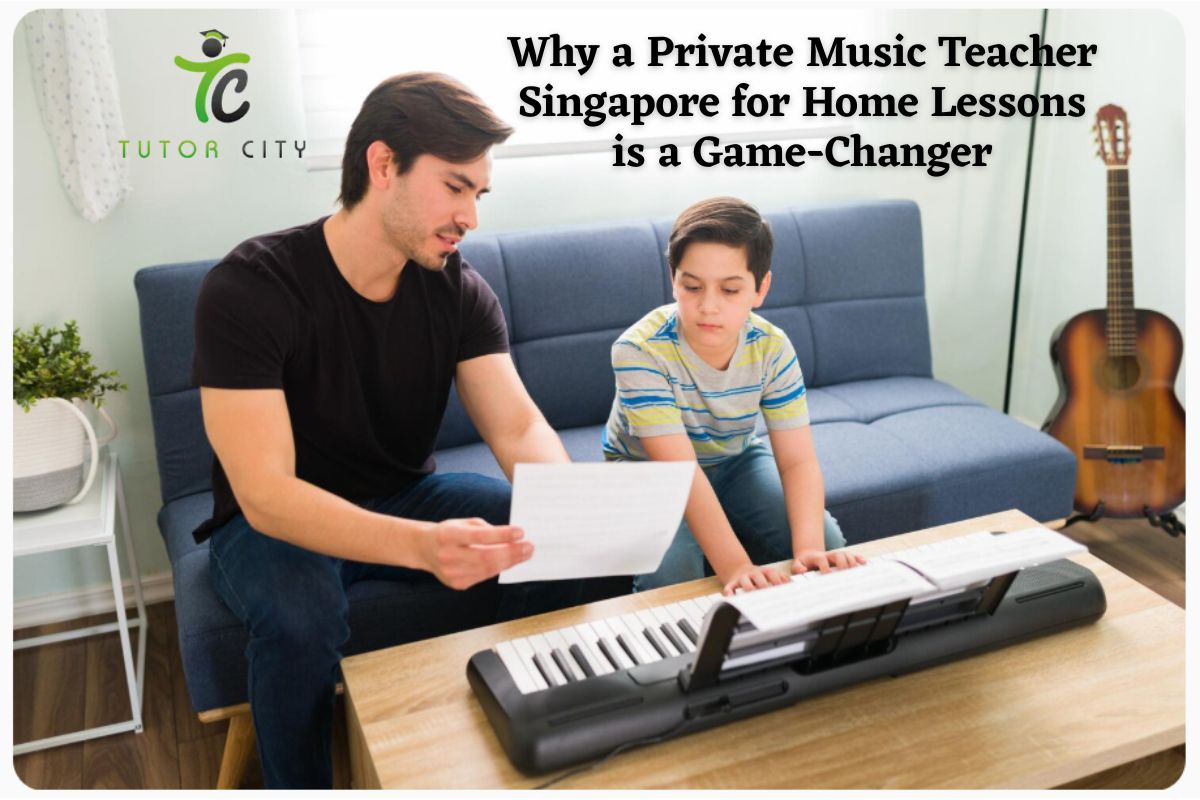
- Published by: Tutor City
- June 20, 2026
- Parenting, Education
Why a Private Music Teacher Singapore for Home Lessons is a Game-Changer
The pursuit of musical literacy is deeply embedded within Singapore's educational culture, reflecting a broader commitment to holistic child development and academic enrichment. For decades, families have recognized that learning an instrument fosters cognitive discipline, spatial-temporal reasoning, and emotional resilience. In Singapore, this artistic pursuit is largely structured around standardized validation pathways, primarily governed by internationally recognized examination boards such as the Associated Board of the Royal Schools of Music (ABRSM) and Trinity College London. These assessment frameworks provide rigorous benchmarks across classical theory and practical performance, making music education a highly structured discipline rather than a passive hobby.
However, navigating the demands of a formal musical education within Singapore's competitive environment presents distinct logistical and psychological challenges. Students balance long school hours, Co-Curricular Activities (CCAs), and supplementary academic commitments, leaving minimal energy for rigid commutes to commercial music centers. This demanding environment has led to a major shift in how families approach instrumental instruction.
Opting for specialized home-based instruction under the guidance of a dedicated private music teacher singapore has emerged as a transformative strategy. By shifting the learning environment from a commercial storefront to the home, families eliminate structural friction, optimize practice routines, and establish a personalized educational foundation that nurtures long-term artistic excellence.
Deconstructing the Convenience Factor and Logistics
The traditional model of instrumental education requires students to travel weekly to a centralized music academy. While this structure has served communities historically, contemporary scheduling demands require a more streamlined approach to time management.
Eliminating Travel Fatigue and Maximizing Student Energy
The geographical layout of Singapore, though highly accessible via public transportation networks, still requires significant travel time during peak after-school hours. Commuting across town with heavy music books, or carrying specialized instruments, depletes a student’s limited physical and mental energy before their lesson even begins.
Arranging for music lessons at home removes this operational friction entirely. The student transitions directly from their academic studies or rest periods into a focused music session without the cognitive interruption of a frantic commute. Preserving this mental energy directly improves focus, resulting in better retention of complex musical concepts and technical instructions during the lesson.
The Safe Space of Familiar Environments
Learning a musical instrument requires vulnerability. Students must make mistakes, confront technical deficiencies, and experiment with unfamiliar physical coordination in front of an instructor. In a commercial music studio, thin partition walls frequently allow the sounds of overlapping instruments to bleed through, which can cause self-consciousness and performance anxiety in younger or novice learners.
The home environment provides an inherently secure, distraction-free sanctuary. Practicing on their own instrument whether it is a calibrated acoustic upright or a personal digital keyboard allows students to develop consistent tactile muscle memory and dynamic control. This psychological safety encourages students to take artistic risks, ask clarifying questions comfortably, and correct technical errors without fear of external judgment.
Unparalleled Scheduling Flexibility for Busy Households
Commercial music schools operate on rigid, back-to-back booking blocks, leaving zero margin for school overruns, delayed school transport, or unexpected family commitments. If a student misses their designated 45-minute slot, the lesson fee is often forfeited, and scheduling a makeup session within a crowded academy calendar can be exceptionally difficult.
Engaging private instruction offers adaptive scheduling that aligns with the realities of modern family life. Private educators can coordinate directly with parents to adjust lesson times during school exam blocks or holiday periods. This structural flexibility ensures instructional continuity, preventing the costly disruptions that frequently stall a student's musical development.
Customizing Pedagogy and Exam Preparation Mastery
Every student possesses a distinct learning style, cognitive pace, and set of musical aspirations. Group classes or standardized academy curricula often struggle to accommodate these individual variations effectively.
One-on-One Curricular Customization Beyond Generic Workbooks
In a standard commercial setting, teachers are often required to follow a rigid corporate syllabus designed to move uniform cohorts through generic grade books at a fixed pace. This approach can frustrate fast learners while alienating students who require specialized, slow-paced remediation on foundational mechanics like wrist flexibility or complex syncopated rhythms.
An independent private instructor can customize their pedagogical framework from the very first session. If a student shows a natural aptitude for auditory learning but struggles with sight-reading, the teacher can blend ear-training exercises with targeted reading drills. Furthermore, private mentors can balance classical exam pieces with contemporary arrangements, jazz structures, or cinematic scores, keeping the student intrinsically motivated over the long term.
Strategic Preparation for ABRSM and Trinity Practical Examinations
The grading criteria for international music boards are exacting, requiring precision across four distinct categories: set pieces, technical scales, sight-reading, and aural skills. Many academy instructors focus heavily on the performance pieces while rushing through the sight-reading and aural components in the weeks immediately preceding the exam. This uneven preparation often leads to student panic and lower scores.
Specialized piano teachers in singapore structure their weekly home lessons to integrate all exam components comprehensively from day one. By conducting mock exam simulations in the comfort of the student's home, instructors can systematically evaluate aural identification skills, rhythm clap-backs, and sight-reading pacing, transforming exam day from an intimidating hurdle into a confident showcase of mastery.
Evaluating E-E-A-T and Instructor Selection Metrics
The abundance of private music tutoring profiles in the local market means that parents must use clear criteria to identify authentic instructional quality and professionalism.
Identifying Experience Signals and Authentic Teaching Credentials
True expertise in music pedagogy goes far beyond a teacher's ability to play an instrument skillfully. An authoritative instructor must demonstrate clear experience signals, including formal certifications such as an ABRSM Diploma, a Trinity Associate Diploma (ATCL/LTCL), or a degree from reputable institutions like the Nanyang Academy of Fine Arts (NAFA) or the Yong Siew Toh Conservatory of Music.
Beyond paper credentials, parents should look for indicators of pedagogical experience. An expert instructor understands child psychology, knows how to resolve tension in a student's hand posture, and stays updated on the latest adjustments to examination syllabi.
Building Trust Through Data-Driven Milestone Tracking
A trustworthy music educator avoids vague promises of rapid, effortless success. Instead, professional mentors build trust by maintaining structured practice logs, setting clear weekly goals, and providing transparent feedback to parents.
Because home lessons take place within the family residence, parents can easily observe the instructor's teaching style, communication approach, and professionalism. This proximity facilitates an active, open partnership between parent, student, and teacher, ensuring that home practice sessions between weekly visits remain highly productive and aligned with long-term goals.
Conclusion: Nurturing a Lifelong Artistic Passion
The decision to introduce music education into a child's life represents a significant investment of time, emotion, and financial resources. While commercial music academies offer a traditional path, the fast-paced lifestyle of modern Singapore requires a more adaptive, efficient, and personalized approach.
By eliminating travel stress, establishing a comfortable and secure learning environment, and delivering custom-tailored instruction, private home lessons provide an optimal framework for long-term success. Partnering with a dedicated private tutor transforms a student's musical development from a stressful weekly chore into an inspiring, deeply rewarding artistic journey.
Are you ready to bring high-quality music education directly into your home? At Tutor City, we specialize in connecting families across Singapore with highly qualified, experienced, and vetted private music instructors tailored to your specific goals, instrument choices, and schedule. Whether your child is taking their first steps on the keyboard or preparing for advanced higher-grade practical examinations, we provide the personalized support needed to help them excel.






Tutor City's blog focuses on balancing informative and relevant content, never at the expense of providing an enriching read.
We want our readers to expand their horizons by learning more and find meaning to what they learn.
Resident author - Mr Wee Ben Sen, has a wealth of experience in crafting articles to provide valuable insights in the field of private education.
Ben Sen has also been running Tutor City, a leading home tuition agency in Singapore since 2010.
