
 blog
blog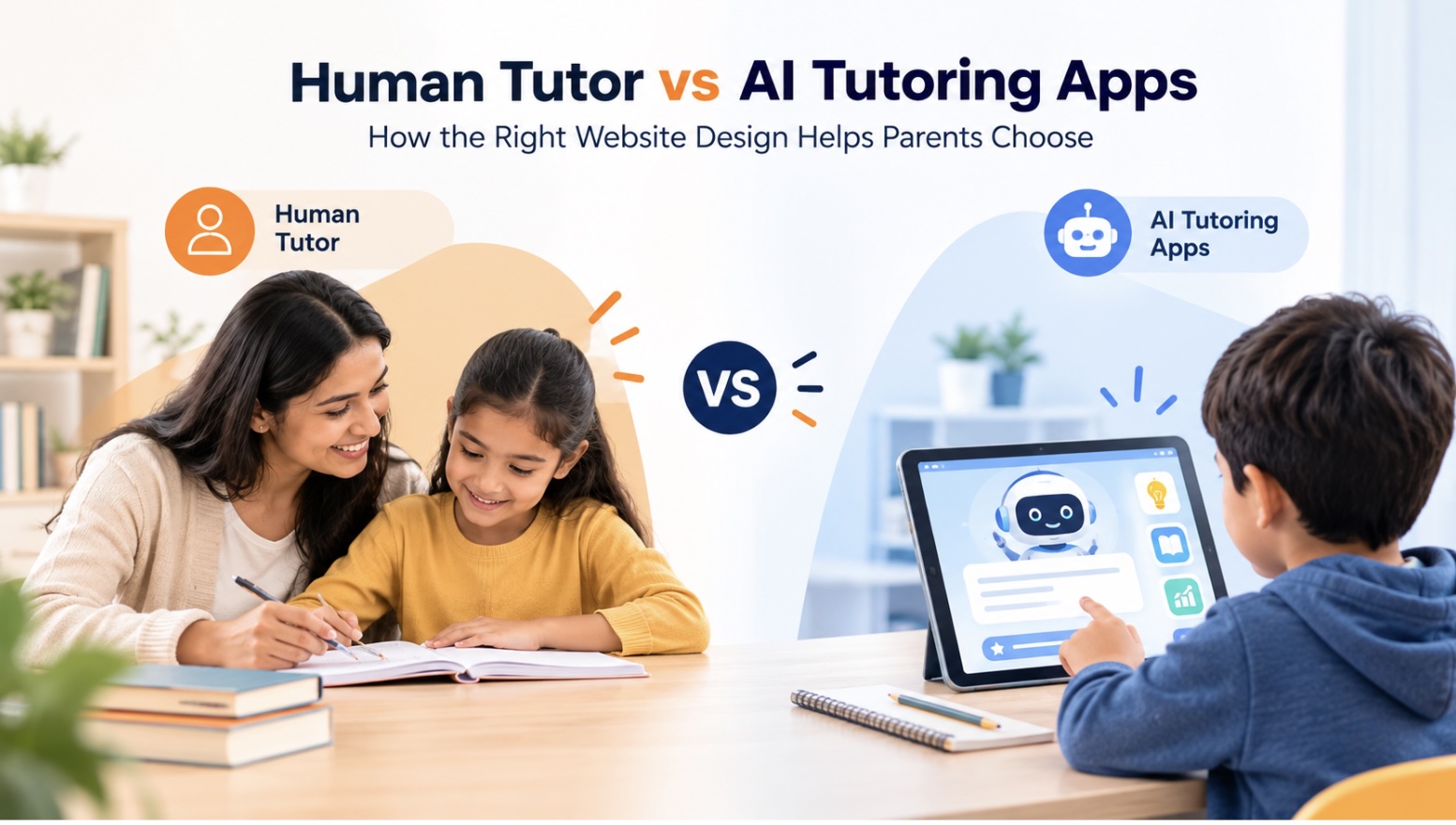
- Published by: Tutor City
- September 15, 2026
- Technology
Human Tutor vs AI Tutoring Apps: How the Right Website Design Helps Parents Choose
Last year, a friend asked me to help her pick a math tutor for her son. She had two options open in different tabs. One was a slick AI tutoring app with a beautiful landing page. The other was a real, experienced tutor with a website that looked like it hadn't been touched since 2020.
Guess which one she almost chose first, purely on looks. It wasn't the tutor with fifteen years of glowing results.
That moment stuck with me. As someone who runs a company built around helping businesses present themselves online, I couldn't stop thinking about it. A fantastic tutor was nearly overlooked, simply because of a website.
Why Singapore Parents Face This Choice More Than Ever
Tuition has always been a big part of life here in Singapore. What's changed recently is the sheer number of options parents now have to sort through.
AI tutoring apps have exploded in popularity. They promise round-the-clock availability, instant feedback, and lower costs than a private tutor. For busy parents juggling work and multiple kids, that pitch sounds appealing.
Human tutors, meanwhile, are still out there doing excellent work. Many just haven't updated how they present themselves to match how parents actually search today.
This creates a strange situation. The tutors with the strongest track records sometimes get the least visibility online. Their web presence simply hasn't kept pace, even when their results speak for themselves.
What Parents Actually Notice First
Here's something I've learned after years of running a website design company. Most parents decide within seconds whether they trust what they're looking at.
A cluttered, outdated site makes even a brilliant tutor look unprofessional. A clean, well-organised app makes even an average product feel trustworthy and modern.
This isn't fair, exactly, but it's how people make quick decisions online. Good website design exists precisely to fix this imbalance for smaller businesses and individual tutors.
I've watched talented tutors lose potential students over this. Their teaching was never the problem; their website simply failed them.
The fix is often simpler than people expect. It doesn't take a complete rebrand. Often it just needs a clear layout, honest photos, and an easy way to book a trial lesson.
What AI Tutoring Apps Get Right (and Where They Fall Short)
Credit where it's due. AI tutoring apps genuinely solve real problems for busy families. They're available at any hour, which matters when homework panic hits at ten at night.
They can also adjust difficulty instantly based on a student's answers. That kind of quick, responsive practice is hard for any human to match consistently.
Where they fall short is harder to quantify, but parents feel it anyway. An app can't notice when a student is quietly losing confidence. It can't ask the right question at exactly the right moment, the way an attentive human tutor can.
I've also noticed apps struggle with the subjects that require genuine discussion, like essay writing or literature analysis. Math drills work well in an app. A thoughtful conversation about a poem doesn't translate the same way.
What Human Tutors Bring That No App Has Matched Yet
A good tutor does more than explain a formula twice. They build a relationship with a student over weeks and months.
They notice when a normally confident kid seems distracted, and ask why. They adjust their approach on the fly when something clearly isn't clicking. They celebrate small wins in a way that actually means something to a twelve-year-old.
This kind of mentorship matters especially during stressful exam periods here, like PSLE or O-Level preparation. A student needs more than correct answers sometimes. They need someone who genuinely believes in them.
I've seen this play out with my own kids too. A good tutor remembers a bad week at school without being told. That kind of attentiveness isn't something any app has replicated convincingly yet.
How Parents Can Evaluate Either Option Fairly
I'd encourage parents not to let first impressions do all the deciding. Look past the website design, at least at first, and dig into substance.
For human tutors, ask about their teaching approach directly. Request a trial lesson before committing to anything longer. Check reviews from other parents whenever possible.
For AI apps, look closely at how the content is actually structured. Ask whether it adapts meaningfully, or just repeats the same drills. Consider whether your child actually enjoys using it, not just whether you like the idea.
Cost matters too, and it's worth comparing honestly. A tutor's hourly rate might look steep next to a monthly app subscription. Factor in the actual time saved and the results your child achieves, not just the sticker price.
That said, a tutor's website still matters more than most parents realise. A clear, professional site signals that someone takes their work seriously. It's often the first, and sometimes only, chance a tutor gets to make a strong impression.
A Few Final Thoughts
I don't think this has to be an either-or decision for most families. Plenty of parents use AI tools for quick practice, alongside a human tutor for deeper understanding. Both can genuinely earn a place in a child's routine.
What matters most is making an informed choice, rather than a rushed one based purely on appearances. A polished website doesn't guarantee a great tutor. A plain one doesn't mean a bad one either.
As someone who's spent years helping people present their work honestly online, my hope here is simple. I want great tutors found by the families who need them. Too many get lost behind a website that undersells them.
That's really what good design should do in the first place. It shouldn't create false impressions. It should just help the truth come through clearly.
If you're a parent weighing these options right now, take your time. The right choice for your child rarely announces itself in the first five seconds on a screen.






Tutor City's blog focuses on balancing informative and relevant content, never at the expense of providing an enriching read.
We want our readers to expand their horizons by learning more and find meaning to what they learn.
Resident author - Mr Wee Ben Sen, has a wealth of experience in crafting articles to provide valuable insights in the field of private education.
Ben Sen has also been running Tutor City, a leading home tuition agency in Singapore since 2010.
