
 blog
- Published by: Tutor City
- October 27, 2026
- Parenting
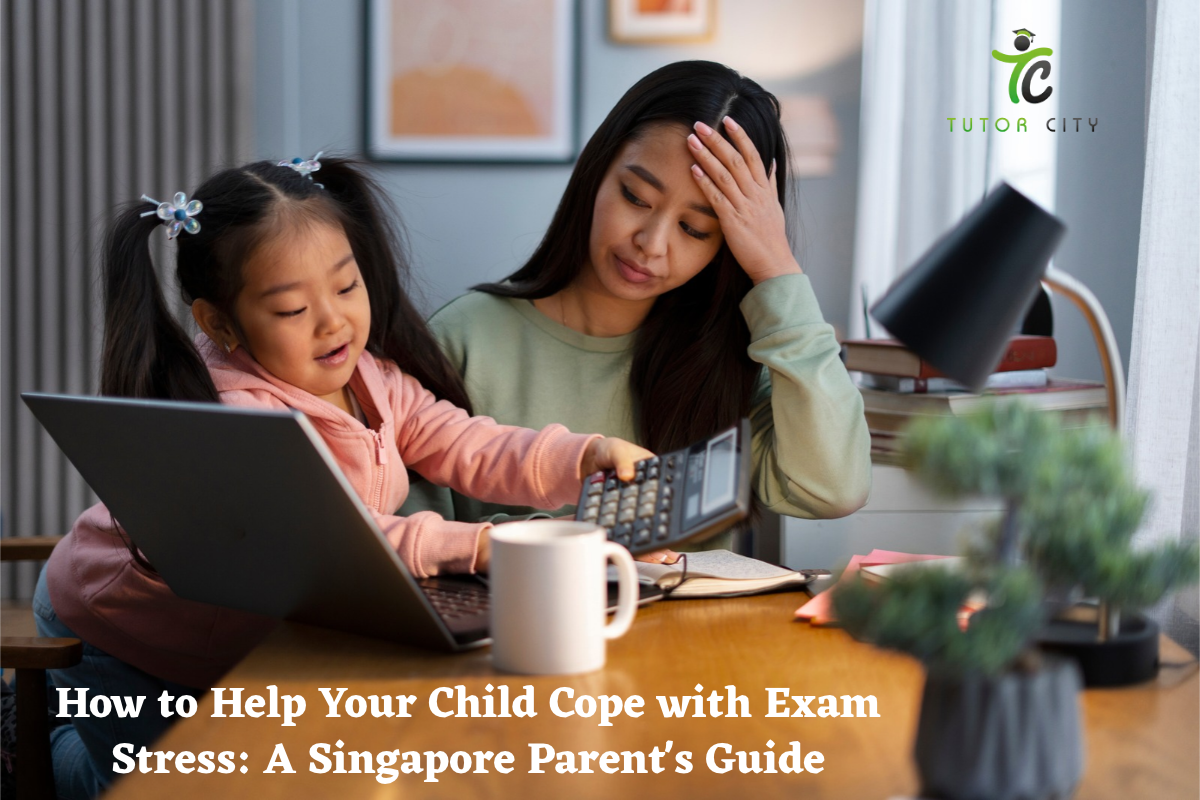
How to Help Your Child Cope with Exam Stress: A Singapore Parent's Guide
Exam season changes the mood at home. Dinner conversations turn to test dates, weekends fill with revision, and even a confident child can become quiet, snappy or tearful. If you have watched your child lie awake worrying about a paper, you are not alone. Many Singapore families go through this every year.
Some pressure before an exam is normal and can even help a child focus. The problem starts when worry becomes too heavy to carry. This guide is written for parents. It explains how to recognise stress, what you can do before, during and after exams, and when to seek help. If you want tips written for students themselves, our post on the best 10 tips to manage exam stress is a good companion. For a wider look at the role of grades, see Reducing exam stress in Singapore: Should Grades Define Worth?.
Signs Your Child May Be Feeling Too Stressed
Children do not always say “I am stressed”. It often shows up in behaviour and in the body. The Health Promotion Board, in an article on HealthHub, lists signs such as:
-
Physical signs: headaches or stomach pains, reduced appetite and poor sleep
-
Emotional and behavioural signs: feeling despair, anxiety or worry, irritability, lack of motivation or focus, or feeling overwhelmed
A single bad evening is not a cause for alarm. Pay attention when changes last for days or weeks, or when your child seems different from their usual self. Younger children may complain of tummy aches or become clingy. Older students may withdraw, snap at family members or say “what is the point?”.
Start With Yourself: Check the Pressure at Home
Parents care deeply about results, and that care can sometimes reach children as pressure. HealthHub advises parents to start by checking that their child does not have unrealistic expectations and to be mindful if the child is harshly self-critical when standards are not met.
Ask yourself honestly:
-
Do I talk about marks more than effort or learning?
-
Do I compare my child with cousins, classmates or siblings?
-
Does my child hear “you must” more often than “how can I help”?
You do not need to lower your hopes. The aim is to make sure your child feels supported, not judged, every time results come up. A school counsellor writing on a Ministry of Education school website advises parents to avoid nagging or criticising and to be their child’s best cheerleader.
Before the Exams: Build a Calm Routine
Plan revision early and in small pieces. Help your child list what to study, prioritise key subjects and begin early rather than cramming near the end. HealthHub suggests starting with easier topics first to build confidence. A simple weekly plan on the wall, with breaks included, reduces the feeling of “so much to do”.
Protect sleep and meals. The school counsellor’s article recommends at least 7 to 8 hours of sleep a day and not allowing your child to skip meals, especially breakfast. HealthHub also notes that food high in fat, sugar and caffeine can make a child moody, irritable and hyperactive. Late-night revision often does more harm than good.
Build in downtime. Set aside time for play and recreation, so your child can unwind. Exercise helps too. HealthHub suggests short, simple activities or a sport to take the mind off schoolwork. A 20-minute walk or a game of badminton can be enough.
Create a good study spot. A quiet, tidy table with good lighting and no distractions makes revision easier. Some children study better at a library or with friends, so ask what works for them.
Know your child’s style. The school counsellor advises matching supervision to the child. The same article says to adjust your level of supervision and monitoring to suit your child, so independent, self-directed children may need a different level of checking from those who prefer company. Ask, “Would you like me to quiz you, sit with you, or leave you to it?”
Teach simple calming skills. The same article mentions deep belly breathing, calming mental images, and tensing and loosening tight muscles as ways to keep stress down. Practise these together when your child is calm, so they work better when nerves hit. For example, breathe in slowly through the nose, then out through the mouth, a few times before a test.
What to Say (and Not Say) to Your Child
Words matter more than parents realise. Small changes can make a big difference.
|
Instead of |
Try saying |
|---|---|
|
“You must get an A.” |
“I know you are working hard. Tell me how I can help.” |
|
“Why is your friend scoring higher?” |
“What do you feel went well this week?” |
|
“If you fail, what will happen?” |
“Whatever the result, we will work it out together.” |
|
“Stop worrying.” |
“It sounds like you are worried. What is bothering you most?” |
HealthHub recommends reassuring your child unconditionally: tell them you are proud of them and that your love does not depend on exam results. This can be one of the most calming things a child hears.
When your child shares a worry, listen first. Resist the urge to fix everything straight away. Often a child just needs to feel heard.
On the Day of the Exam
-
Keep the morning simple. Pack the bag the night before, check stationery and any permitted items, and leave with time to spare.
-
Offer a good breakfast. Do not let your child skip it.
-
Avoid last-minute cramming or quizzing. A quick, calm look at notes is fine, but drilling at the school gate tends to raise anxiety.
-
Send a short, warm message. Something like “Do your best, I am proud of you” is enough.
After Each Paper: Be Careful With Post-Mortems
Many children come out of the exam hall replaying every question. HealthHub advises listening to how your child feels, avoiding dwelling only on mistakes and not comparing with peers. Plan a small activity afterwards, such as a favourite meal or a short outing, so your child can unwind before the next paper.
If there are more papers ahead, help your child move on. What is done is done, and the next paper deserves full attention.
When Results Come Back
Results can trigger strong emotions, for both children and parents. Stay calm and begin with something positive: effort shown, a subject that improved, or a skill that grew. Then look at what happened with curiosity rather than blame.
-
Review the paper together and sort mistakes into types: not knowing the content, careless errors and running out of time
-
Decide on one or two small changes rather than a full overhaul
-
Make it clear that one result does not define your child
If a pattern of weak results keeps appearing, it may point to learning gaps or study habits that need attention rather than a lack of effort.
When Tuition Can Help (and When It Cannot)
For some children, stress comes from feeling lost in a subject. Targeted help from a tutor can build confidence by clearing up confusion step by step. This works best when the tutor focuses on understanding rather than adding more worksheets.
If your child is already overloaded, adding more lessons may make things worse. Ask whether the stress comes from not understanding the material or from too much on the schedule. Our guide on signs your child needs a tutor can help you decide.
If you would like to explore a tutor, you can submit a tutor request and Tutor City will send profiles matched to your child’s level and subject. You can check typical fees on the tuition rates page first.
When to Seek Help
Exam stress is common and usually passes. Seek support if you notice that:
-
Your child’s sleep, appetite or mood stay disturbed for a long time
-
They refuse to go to school or avoid exams entirely
-
They talk about feeling hopeless or say they cannot cope
-
They say things about harming themselves
Start by talking to your child’s form teacher or school counsellor. You can also speak to your family doctor. For support in Singapore, according to the National Council of Social Service and the organisations’ own pages, you can reach:
-
national mindline 1771 (round-the-clock support): hotline 1771, or WhatsApp at +65 6669 1771. Online resources are at mindline.sg.
-
Samaritans of Singapore: 24-hour hotline 1767 and 24-hour CareText via WhatsApp at 9151 1767
-
Tinkle Friend: 1800 2744 788, for primary school children aged 13 and below (weekdays except public holidays, 2.30pm to 5pm)
If your child is in a life-threatening emergency, call 995 right away. SCDF asks that 995 be used only for emergencies.
FAQ
Q: Is some exam stress normal?
A: Yes. A little nervousness can help a child stay alert. It becomes a concern when it affects sleep, eating, mood or daily life for a long time.
Q: How much should I supervise revision?
A: It depends on your child. Younger children usually need more structure, while older students often prefer space. Ask your child what kind of help they want.
Q: Should I stop my child from doing activities they enjoy during exam season?
A: Not entirely. Downtime and exercise help children cope. Keep short, enjoyable activities in the routine so your child can recharge.
Q: My child says they do not care about the exams. Should I worry?
A: Sometimes “I do not care” hides fear of failing. Stay calm, ask gently what is behind it and consider speaking to the teacher or counsellor if it continues.
The Bottom Line
Your child does not need perfect parents during exam season. They need a calm home, enough sleep, regular meals, time to rest and clear proof that your love does not depend on a score. Watch for warning signs, speak with care, plan early and ask for help when needed. A child who feels supported is better placed to do their best, whatever the result.






Tutor City's blog focuses on balancing informative and relevant content, never at the expense of providing an enriching read.
We want our readers to expand their horizons by learning more and find meaning to what they learn.
Resident author - Mr Wee Ben Sen, has a wealth of experience in crafting articles to provide valuable insights in the field of private education.
Ben Sen has also been running Tutor City, a leading home tuition agency in Singapore since 2010.
