
 blog
- Published by: Tutor City
- October 22, 2026
- Education
How Private Tutors and Tuition Centres in Singapore Can Attract More Students with Simple Printed Materials
Singapore's education sector is competitive, with parents looking for suitable tuition options to support their children's learning. Private tutors and tuition centres need to explain their services clearly and build trust with families before parents decide where to enrol their children.
Online advertising, social media, and websites help educators reach potential students. However, printed materials still offer a practical way to introduce tuition services to local communities. A flyer can explain available classes, while a name card makes it easy for parents to contact a tutor after a conversation.
The key is to keep the message simple, relevant, and easy to act on. Rather than printing materials without a clear plan, tutors can focus on the subjects they teach, the students they serve, and the areas where they want to attract enquiries.
Use Flyers to Promote Tuition Services
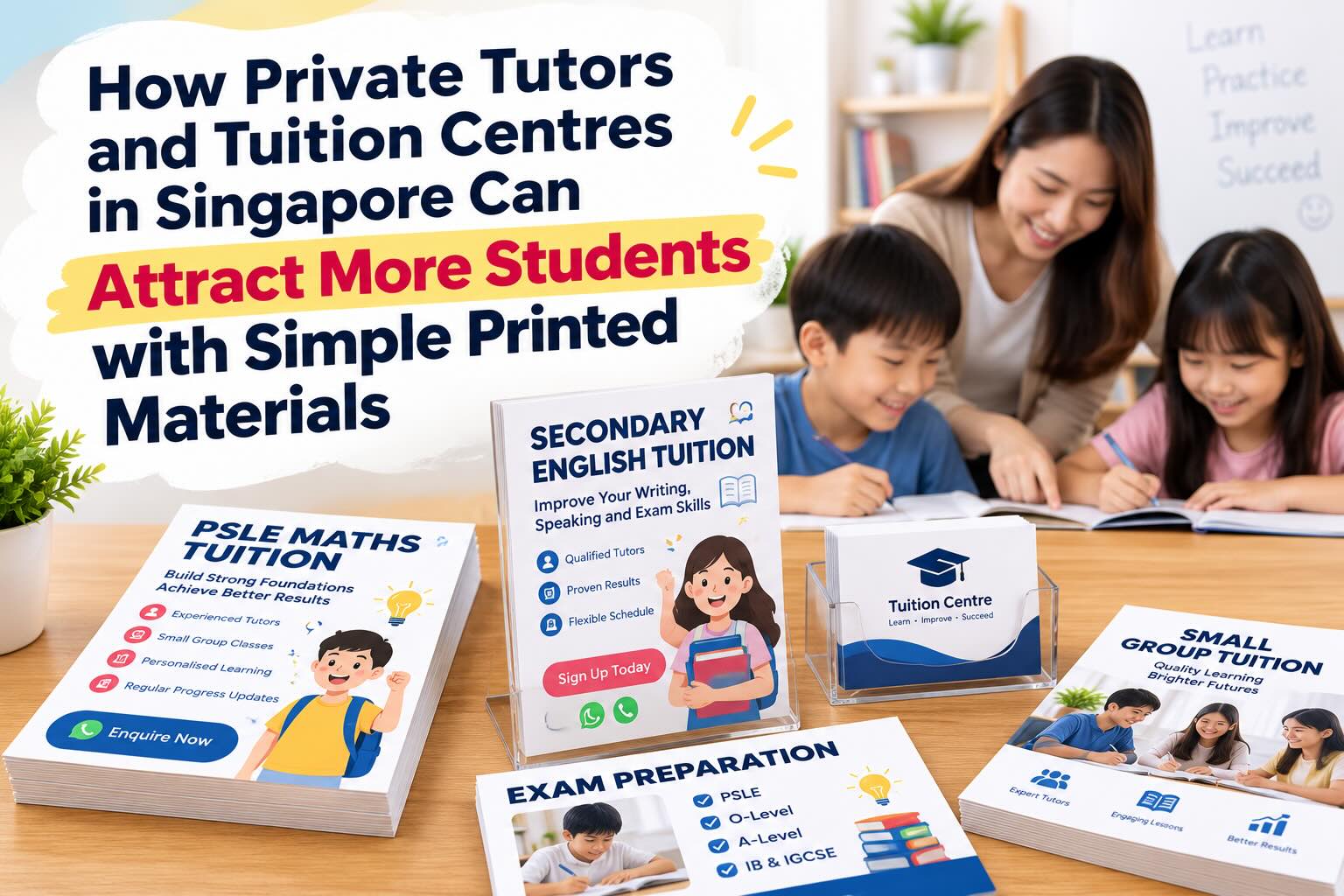
Flyers are useful for introducing private tutoring services, tuition centres, holiday programmes, and examination preparation classes. They allow educators to present important information in a compact format that parents can read and keep for future reference.
Highlight the subjects and levels offered
Parents should be able to understand the service at a glance. State the subjects taught, student levels, class formats, and general teaching approach. If a tutor specialises in primary mathematics or secondary science, make that focus clear.
Explain what makes the classes useful
Instead of relying on broad claims, describe the actual learning support available. This could include small-group lessons, structured revision, practice exercises, individual feedback, or help understanding difficult topics.
Add clear contact information
Every flyer should make the next step obvious. Include the tutor's name or centre name, telephone number, website, email address, or a QR code linking to an enquiry page.
Its flyer printing includes flat flyers and folded leaflets, with different sizes, paper stocks, and finishing options. A simple flyer may work well for promoting one subject, while a folded leaflet can provide more space for multiple programmes or class details.
Distribute Printed Materials to the Right Audience
A well-designed flyer is useful only when it reaches people who may need the service. Tutors should consider where their intended audience spends time and which distribution methods are appropriate.
For example, an educator offering primary school tuition may focus on families in nearby residential areas. A centre providing examination preparation could promote its courses to parents seeking support for particular school levels.
Possible distribution methods include:
- Community noticeboards: Seek permission to display flyers in suitable residential or community spaces.
- Educational events: Share information at relevant fairs, workshops, or parent events where promotional materials are permitted.
- Local partnerships: Work with appropriate community organisations or complementary businesses that agree to share information.
- Existing enquiries: Give interested parents a flyer they can take home and discuss with their family.
Always check the relevant venue rules and obtain permission before distributing materials. Avoid unsolicited approaches that may inconvenience families or violate local restrictions.
Use Name Cards to Build Professional Connections
Name cards are particularly useful for independent tutors who meet parents through referrals, community events, professional networks, or existing students.
A card provides a simple way to share contact details without requiring someone to search for the tutor online. It also gives parents something tangible to keep when they are comparing educational options.
A useful name card should include the tutor's name, main teaching subjects, relevant qualifications if appropriate, and preferred contact method. A website or professional profile can provide additional information about teaching experience and class arrangements.
Tuition centre owners can also use name cards when meeting parents, school-related service providers, and potential partners. Consistent branding across name cards, flyers, and other materials helps create a recognisable identity.
Combine Print Marketing with Online Communication
Printed materials and digital channels can work together to make it easier for parents to evaluate tuition options.
A flyer could direct readers to a website containing course details, tutor biographies, class schedules, and frequently asked questions. A name card could include a QR code that opens a contact page or an online enquiry form.
This approach allows the printed material to introduce the service while the online resource provides more detail.
For example, a tuition centre advertising an upcoming science revision course could distribute flyers in permitted local locations and share the same course information on its website. Parents could scan the QR code to check the schedule and request further information.
Make sure the linked page works well on mobile devices. Parents should not have to navigate through several unrelated pages to find the advertised course.
Where to Find Printed Materials for Education Marketing
Once the message and distribution plan are ready, tutors can explore printing providers that offer suitable formats and quantities.
CUSTA provides printing products for businesses, including flyers, leaflets, and other promotional materials. These options can help private tutors and tuition centres prepare materials for course announcements, local promotions, and professional networking.
When choosing a format, consider the amount of information parents need and how the material will be distributed. Review the current product specifications, order quantities, production timelines, and delivery information before placing an order.
Prepare print-ready artwork and proofread all details before approval. If design support is needed, check the provider's current services and requirements.
Turn Enquiries into Student Enrolments
Printed marketing should support a clear path from initial awareness to an enquiry. Once parents express interest, respond professionally and provide the information they need to make a decision.
A simple process could include:
- Share relevant information: Explain the subjects, class levels, schedule, and fees clearly.
- Answer parents' questions: Provide accurate details about teaching methods, class formats, and learning support.
- Offer an appropriate next step: Invite interested families to request more information or discuss whether the class suits their child's needs.
- Review campaign results: Track enquiries and enrolments to assess the value of the printed materials.
Avoid promising guaranteed grades or examination results. Parents are more likely to make informed decisions when educators communicate their services honestly and set realistic expectations.
Conclusion
Private tutors and tuition centres in Singapore can use simple printed materials to introduce their services, build professional connections, and encourage student enquiries. Flyers help explain courses, while name cards make it easier for parents to keep contact details and follow up later.
The best approach combines clear messaging, appropriate distribution, consistent branding, and useful online information. By starting with a focused campaign and reviewing the results, educators can make informed marketing decisions without relying entirely on paid digital advertising.






Tutor City's blog focuses on balancing informative and relevant content, never at the expense of providing an enriching read.
We want our readers to expand their horizons by learning more and find meaning to what they learn.
Resident author - Mr Wee Ben Sen, has a wealth of experience in crafting articles to provide valuable insights in the field of private education.
Ben Sen has also been running Tutor City, a leading home tuition agency in Singapore since 2010.
