
 blog
blog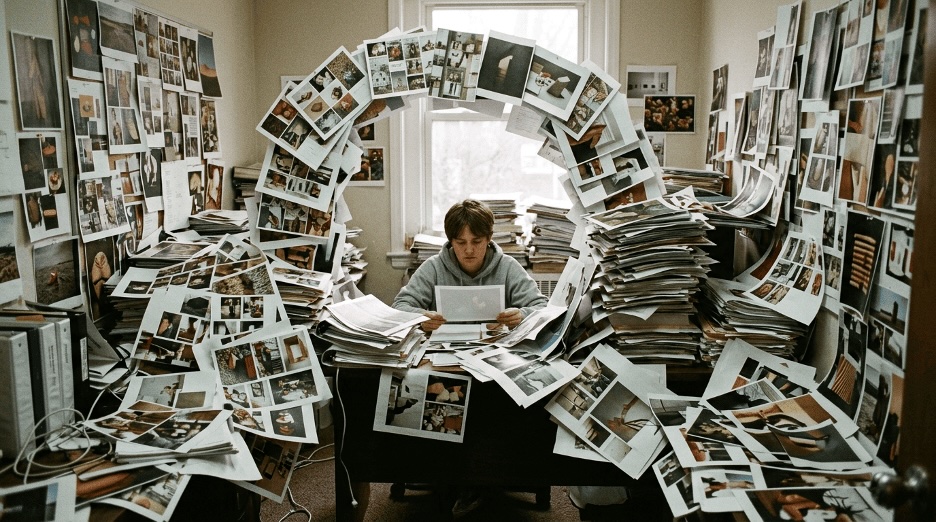
- Published by: Tutor City
- May 07, 2026
- Technology
Why Visual Content Overload Is Becoming a Real Problem for Content Teams
The modern marketing landscape is currently facing a silent crisis: the sheer volume of visual assets is overwhelming the humans designed to manage them. Every day, content teams are expected to produce dozens of high-quality visuals for social media, blogs, and advertisements. This relentless demand has created a phenomenon known as visual content overload. When the volume of production exceeds the capacity for meaningful curation, brand identity begins to suffer.
The solution for many teams has been the adoption of a professional ai image generator to bridge the gap between demand and output.
However, simply having the tools is no longer enough. Teams are finding that without a unified strategy, they are drowning in a sea of disjointed assets that lack a cohesive voice. This article explores why this overload is happening and how professional creators are using higgsfield to regain control over their creative process.
The Roots of Visual Content Overload
The problem began with the shift toward visual-first communication on every major digital platform. Algorithms now prioritize high-frequency posting, which forces teams to create more content than ever before.
According to research by McKinsey & Company, the ability to scale personalized content is becoming a primary competitive advantage for modern brands.
This pressure to scale has led to three specific challenges:
- Asset Fragmentation: Creative assets are often scattered across different tools, folders, and local drives.
- Quality Dilution: In the rush to meet deadlines, teams often settle for "good enough" rather than "brand perfect."
- Creative Burnout: Designers spend more time on repetitive tasks than on high-level conceptual thinking.
When a team uses a fragmented ai image generator workflow, they often lose the ability to maintain a consistent aesthetic across different campaigns.
Why Professional Teams Are Struggling with Traditional AI Tools
Many first-generation AI tools were designed for casual users rather than professional creative studios.
These tools often produce "uncanny" or generic results that require heavy editing to become commercially viable. For a professional content team, a tool that requires ten minutes of manual touch-ups for every generated image is not a scalable solution. Higgsfield addresses this by unifying the most powerful AI models into a single, professional-grade interface.
Instead of jumping between different platforms for different styles, teams can access specialized models in one place:
- Higgsfield Soul: This model focuses on professional aesthetics and high-end photographic quality.
- Seedream: Ideal for highly creative, conceptual, and avant-garde visual storytelling.
- Nano Banana Pro: Optimized for rapid iteration without sacrificing the core structure of the image.
- Flux.1: A powerhouse for technical precision and complex prompt adherence.
By having these tools under the higgsfield umbrella, teams can eliminate the friction of tool-switching. This unification is the first step in solving the overload problem: it simplifies the tech stack so the team can focus on the art.
The Cognitive Cost of Asset Management
Every new image generated adds to the cognitive load of the creative director.
They must ask: Does this fit the brand? Is the resolution high enough for print? Can we turn this into a video?
When assets are generated in a vacuum, these questions become harder to answer.
Visual content overload is not just about the number of files: it is about the lack of utility in those files. An ai image generator that produces 4K output by default reduces the need for manual upscaling and post-production. This allows teams to move directly from the generation phase to the distribution phase.
Furthermore, the lack of character consistency in traditional AI tools often means that "overload" is actually "waste." If you generate twenty images but none of them feature the same consistent brand ambassador, nineteen of those images are effectively useless.
Strategic Solutions for Visual Overload
To combat the weight of too much content, teams must move toward a "Studio First" mindset.
This involves creating a workflow where generation, curation, and conversion happen in a single, seamless environment. Here are five strategies to manage the visual influx effectively:
1. Centralize the Model Library
Stop using multiple subscriptions for different visual styles.
Use a platform like higgsfield to access Higgsfield Soul, Seedream, and Flux.1 in one workspace. This ensures that all team members are pulling from the same high-quality sources. It also simplifies the billing and administrative side of content creation.
2. Prioritize Native 4K Output
Low-resolution images contribute to digital clutter because they often need to be recreated or upscaled later. By using an ai image generator that produces native 4K resolution, you ensure every asset is "future-proof."
High-resolution assets can be cropped for various social media formats without losing clarity. This reduces the total number of unique assets you need to generate for a single campaign.
3. Implement Character Consistency
The most common cause of content waste is the inability to replicate a character across multiple scenes. Professional workflows allow for character locking, which ensures your visual storytelling remains coherent.
When your "content overload" consists of consistent, reusable characters, it becomes a valuable asset library rather than a pile of random images.
4. Bridge the Gap Between Image and Video
Static images are only one part of the modern content mix.
Teams often struggle because they have to use one tool for images and an entirely different workflow for video. A professional platform allows for seamless image-to-video conversion.
This means a single high-quality image can be transformed into a dynamic social media ad in seconds. By repurposing images into videos, you get more value out of every single generation. Teams can use an AI video generator to create these short clips, then add subtitles to video for clearer social media viewing.
5. Standardize Brand-Accurate Colors
Color drift is a major issue when teams generate hundreds of images. If the brand's signature blue looks different in every post, the brand identity weakens. Advanced AI studios allow for specific color control and brand-accurate rendering. This ensures that no matter how much content you produce, it all looks like it belongs to the same family.
The Future of Content Teams: From Creators to Curators
As AI technology continues to evolve, the role of the content team is shifting. The challenge is no longer "how do we make this?" but rather "which of these should we use?" Higgsfield is designed to support this transition by providing a professional studio environment.
When you use a high-end ai image generator, you are not just making pictures: you are building a visual ecosystem. The goal is to move away from the chaos of overload and toward the precision of a controlled creative studio.
Content teams that embrace a unified workflow will find they can produce more while actually working less on the mundane aspects of design. They can spend their energy on the "why" of the campaign rather than the "how" of the image.
Conclusion: Mastering the Visual Deluge
Visual content overload is a symptom of a transition period in digital marketing. We have the power to create infinite visuals, but we are still learning how to manage that power responsibly.
By choosing a professional tool like higgsfield, teams can consolidate their efforts and maintain a high standard of quality.
The combination of specialized models like Higgsfield Soul and technical powerhouses like Flux.1 provides the flexibility needed for modern marketing. Don't let your team get buried under a mountain of low-quality, disconnected assets. Invest in a workflow that prioritizes consistency, resolution, and creative control. The future of content is not just about quantity: it is about the strategic application of world-class AI technology.






Tutor City's blog focuses on balancing informative and relevant content, never at the expense of providing an enriching read.
We want our readers to expand their horizons by learning more and find meaning to what they learn.
Resident author - Mr Wee Ben Sen, has a wealth of experience in crafting articles to provide valuable insights in the field of private education.
Ben Sen has also been running Tutor City, a leading home tuition agency in Singapore since 2010.
