
 blog
blog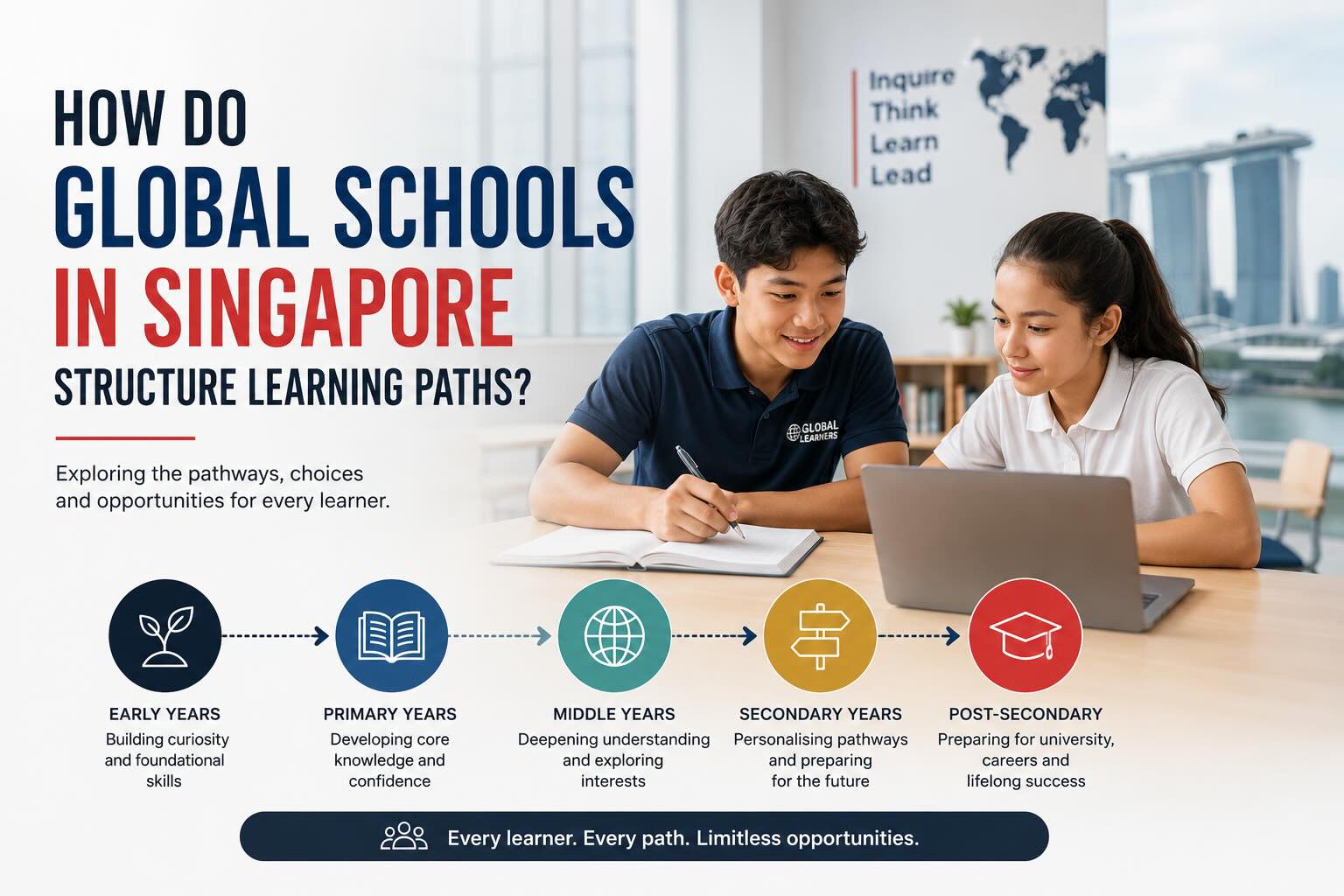
- Published by: Tutor City
- June 03, 2026
- Education
How Do Global Schools In Singapore Structure Learning Paths?
A student’s academic journey is rarely a straight line. In Singapore, global schools design learning paths with a clear sequence, where each stage prepares students for the next level with purpose. These pathways are not just about subjects; they shape thinking patterns, adaptability, and long-term readiness.
Families often notice the structure but may not fully understand how each stage connects. This article explores how learning paths are built, how early years link to senior levels, and what makes these systems effective for different student needs.
Early Learning Paths Set The Foundation
When families review a list of international schools in Singapore, the early years stage often reveals how a school structures its entire pathway.
Programs such as GMP, which cover Nursery to K2, focus on communication, curiosity, and basic social skills.
Children learn through guided exploration rather than strict instruction. This phase builds confidence and comfort in a classroom setting. A strong early foundation ensures that students move into primary education with the right mindset, making future transitions smoother and more structured.
Primary Years Introduce Structured Thinking
After early learning, students enter structured programs such as IB PYP or CBSE primary levels. These stages introduce core subjects while still encouraging exploration and curiosity.
Students begin to develop reading, writing, and numerical skills with more clarity. They also start to understand how subjects connect. This stage acts as a bridge between playful learning and academic discipline, helping students adjust gradually without feeling overwhelmed.
Middle School Builds Direction And Awareness
The middle years stage plays a key role in shaping academic direction. Programs such as CLSP for Grades 6 to 8 or CBSE middle school levels help students develop deeper subject understanding.
Key developments at this stage include:
- Introduction to structured research and project work
- Greater focus on analytical thinking and problem-solving
- Early awareness of subject strengths and interests
This phase helps students recognize their preferences. It also prepares them for more focused study choices in the next stage.
Secondary Levels Focus On Academic Depth
At the secondary level, pathways such as IGCSE or CBSE for Grades 9 and 10 bring greater academic depth. Students study subjects in more detail and begin preparing for higher-level programs.
Assessment becomes more structured, with exams and coursework playing a significant role. This stage builds discipline and subject clarity. It also sets the groundwork for senior-level specialization, which becomes important for university preparation.
Senior Years Prepare Students For Future Pathways
Senior stages include programs such as the IB Diploma for Grades 11 and 12 or continued CBSE pathways. At this level, students choose subjects based on career goals and academic interests.
Many of the top international schools in Singapore offer these globally recognized programs, which connect directly to university requirements. Students gain advanced knowledge and develop independent study habits. This stage ensures they are prepared for higher education and future opportunities.
Dual Curriculum Pathways Offer Flexibility
Some schools offer dual pathways such as IB combined with CBSE, which gives families more flexibility in planning academic journeys.
This option suits families who:
- Prefer global exposure along with a structured national curriculum
- May consider shifting between Indian and international systems
- Want broader university options across different countries
This dual approach allows students to keep multiple pathways open. It reduces pressure and provides adaptability based on plans.
How Learning Paths Stay Connected Across Stages
A strong learning path ensures that each stage links smoothly to the next. Schools design these pathways so that knowledge builds progressively without gaps.
Teachers play an important role in maintaining this connection. They guide students through transitions and ensure that expectations remain clear. This continuity helps students stay confident and focused as they move through different levels of education.
Common Mistakes To Avoid When Choosing A Path
- Ignoring long-term progression
Some families focus only on early years without considering how the pathway leads to senior levels. This can create challenges later.
- Choosing based on familiarity alone
Selecting a curriculum simply because it is familiar may not suit the student’s learning style or goals.
- Overlooking flexibility options
Failing to consider dual or adjustable pathways can limit future choices.
A closer look at the list of international schools in Singapore shows how structured learning paths support steady growth from early years to senior levels. Each stage, from GMP to IB Diploma or CBSE tracks, plays a defined role in shaping development.
Families who understand these pathways can make more informed decisions. A well-planned structure helps students stay confident, adapt to change, and move forward with clarity in their academic journey.






Tutor City's blog focuses on balancing informative and relevant content, never at the expense of providing an enriching read.
We want our readers to expand their horizons by learning more and find meaning to what they learn.
Resident author - Mr Wee Ben Sen, has a wealth of experience in crafting articles to provide valuable insights in the field of private education.
Ben Sen has also been running Tutor City, a leading home tuition agency in Singapore since 2010.
