
 blog
blog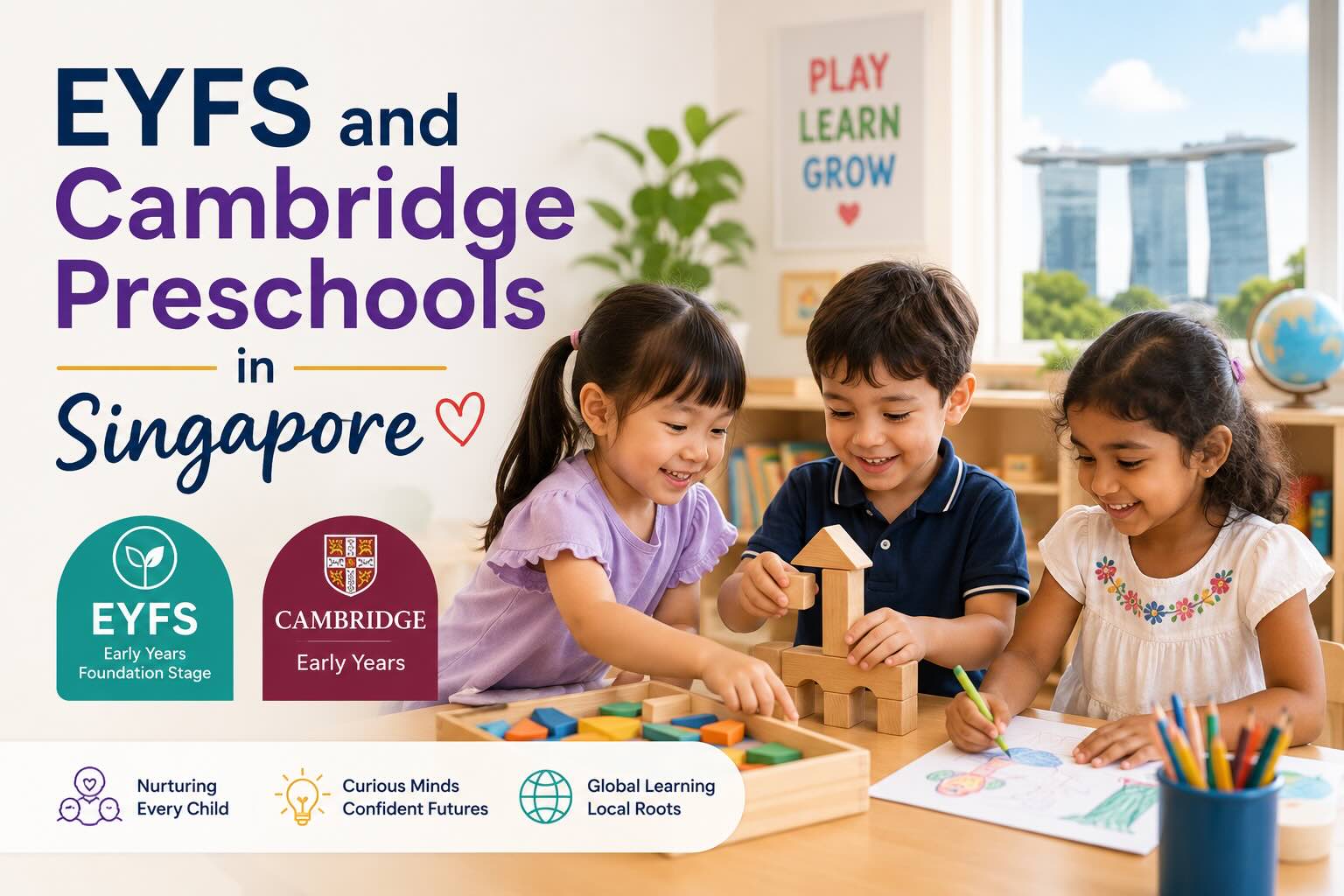
- Published by: Tutor City
- June 24, 2026
- Education
Cambridge Preschools in Singapore
Choosing the right preschool in Singapore can feel like navigating a maze of acronyms, educational philosophies, and open-house invitations. For parents seeking a balanced foundation, British early years programmes have become a familiar part of the discussion.
From the play-based philosophy of the Early Years Foundation Stage (EYFS) to the structured learning pathways offered by a Cambridge preschool in Singapore, these curricula hold a distinct appeal for both expatriate and local families.
Rather than focusing solely on academic achievement, these frameworks place equal importance on social, emotional, physical, and cognitive development. This holistic philosophy aligns closely with what many modern parents value: a grounded, well-structured, yet deeply nurturing start to a child’s educational journey.
If you are weighing these options for your preschooler, let us take a closer look at why EYFS and Cambridge-based early years programmes continue to earn the trust of families in Singapore.
Every Child’s Pace of Development Is Respected
The early years are a period of remarkable growth, but they are also a time when children learn very differently from older students.
Multiple recent studies confirm that young learners are naturally active, with a deep curiosity that draws them towards hands-on experiences rather than formal instruction alone.
British early years programmes are built around this understanding. EYFS, in particular, recognises that children develop at their own pace and encourages educators to support learning through observation and interaction, complemented by carefully designed activities. Rather than pushing all children towards the same milestones at the same speed, teachers adapt experiences to suit individual needs and interests.
For many families, this personalised approach feels reassuring because it helps reduce unnecessary stress while allowing children to develop confidence in their abilities. When learning feels achievable and enjoyable, preschoolers are more likely to remain engaged and motivated.
Play Is Viewed as Serious Educational Work
Ask a young child about their favourite part of school and the answer will often involve games, imaginative activities, or time spent exploring with friends. While some educational approaches may treat these experiences as secondary to academic learning, British early years frameworks place them at the centre of development.
Purposeful play gives children room to test ideas in ways that feel natural to them.
A block tower might become a lesson in balance and persistence, while an imagined shop can help a child practise language, cooperation, and decision-making without feeling like they are being formally taught.
This emphasis on play does not mean academic development is overlooked. Instead, early literacy and numeracy are introduced through experiences that feel engaging and age-appropriate. This careful balance appeals to parents who want their children to develop important competencies without sacrificing the joy and curiosity that characterise early childhood.
Strong Communication Skills Are Developed from the Beginning
Another practical advantage that stands out to parents is the strong emphasis on communication and language development. Both EYFS and Cambridge-based early years programmes encourage children to use language throughout the day, not only during formal learning activities. Instead of waiting quietly for their turn to speak, children are given regular opportunities to find their voice. They may negotiate with peers during group play and share ideas openly, while learning how to express their feelings when navigating social boundaries.
In a multicultural, cosmopolitan hub like Singapore, where bilingualism and global communication are highly valued, this focus on building communicative confidence is a significant draw. It helps children interact comfortably with peers from diverse backgrounds while fostering empathy and respect for different perspectives.
Children Gain Skills That Extend Beyond the Classroom
A high-quality early years education is rarely confined within four walls, and British frameworks are particularly well-known for their focus on outdoor learning and physical exploration. Whether a child is tending a small garden plot or navigating a climbing structure, these experiences are treated as meaningful parts of development, not just breaks from classroom learning.
Moving around outside allows young children to understand spatial relationships while building the core physical strength they need for healthy development.
This active environment also gives them a safe space to learn how to evaluate small risks independently. In a highly urbanised environment, this emphasis can feel especially valuable to parents who want their children to build a healthier connection with the physical world around them.
A Natural Bridge to Primary Education
Long-term educational continuity is another practical consideration that strongly influences a family's decision. The transition from the relaxed environment of preschool to the more formal structure of primary school can sometimes be a jarring experience for young minds. British early years frameworks can help soften that shift by building habits and skills that remain useful across different primary settings.
Instead of focusing on a single rigid track, these programmes cultivate transferable learning habits, including independence, active listening, and the confidence to solve problems. Children gradually become accustomed to structured routines and collaborative tasks, which can make the shift in expectations feel less sudden when they enter primary school. This flexible foundation gives parents peace of mind knowing that their child is developing the social and cognitive readiness needed for the next stage of learning.
Finding the Balanced Choice for Your Child
The popularity of EYFS and Cambridge early years programmes in Singapore reflects a broader appreciation for education that respects children as individuals while supporting emotional wellbeing, intellectual growth, and the joy of discovery. For many parents, this thoughtful balance offers reassurance because it points to something deeper than curriculum choice alone. At their core, these frameworks create a preschool environment where a child's unique personality and pace can be genuinely understood.






Tutor City's blog focuses on balancing informative and relevant content, never at the expense of providing an enriching read.
We want our readers to expand their horizons by learning more and find meaning to what they learn.
Resident author - Mr Wee Ben Sen, has a wealth of experience in crafting articles to provide valuable insights in the field of private education.
Ben Sen has also been running Tutor City, a leading home tuition agency in Singapore since 2010.
