
Looking for Phonics Tuition in Singapore?
Engage a good Phonics Tutor to improve reading and speaking skills for your child


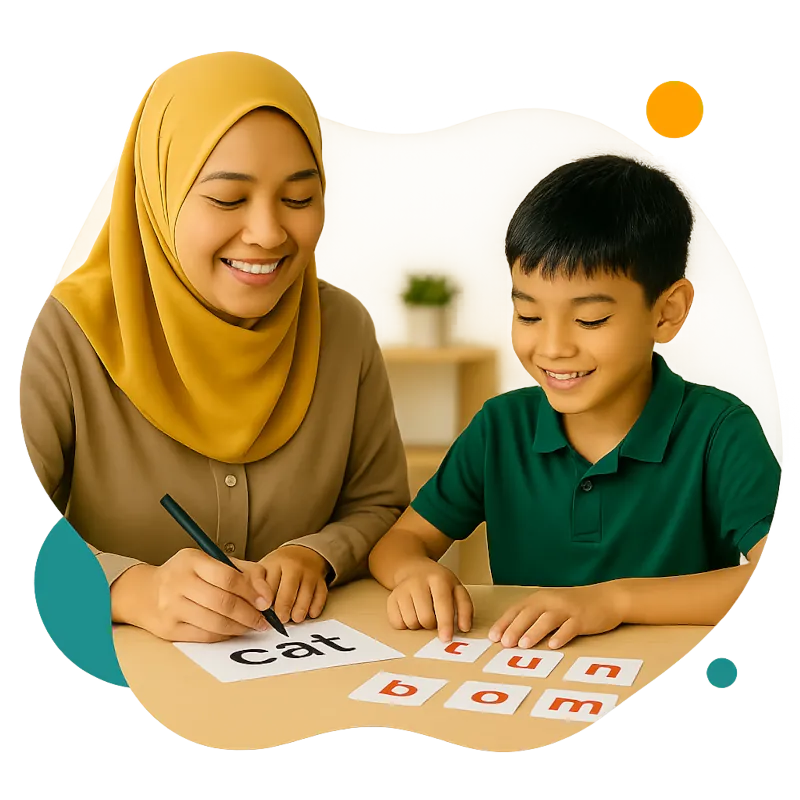
Get a Qualified Phonics Tutor — 1-to-1 at Your Home (or Online)
Certified phonics private tutors & preschool teachers using picture books, songs and games to spark interest and build early-literacy foundations for nursery, kindergarten and lower-primary learners.
Have you been seeking…
- Personalised lessons that match your child’s pace and personality.
- Fun, multi-sensory activities (books, songs, movement, games) to keep attention.
- Clear progress from letter recognition → sounds → blending → reading simple words.
- Support for oral confidence, alphabet memory and sight words.
- Experienced, caring tutors who know how to encourage and motivate.
- Convenience of home lessons and flexible scheduling.

How much do phonics tutors charge?
Typical range $30 – $70 per hour, depending on tutor credentials and level.
| Level | Part-Time tutors 1 | Full-Time tutors | Ex/Current Teachers |
|---|---|---|---|
| Nursery | $30 – $35 | $35 – $40 | $45 – $50 |
| Kindergarten | $30 – $35 | $40 – $45 | $45 – $60 |
| Primary / PYP | $25 – $30 | $35 – $50 | $55 – $70 |
1) Includes students in polytechnics, universities and graduates tutoring part-time.
2) Teachers include student care centres, PCF/private kindergartens, MOE & international schools.
3) For special-needs support, see our SPED page.
Match profile to your goals and budget for the best learning experience.
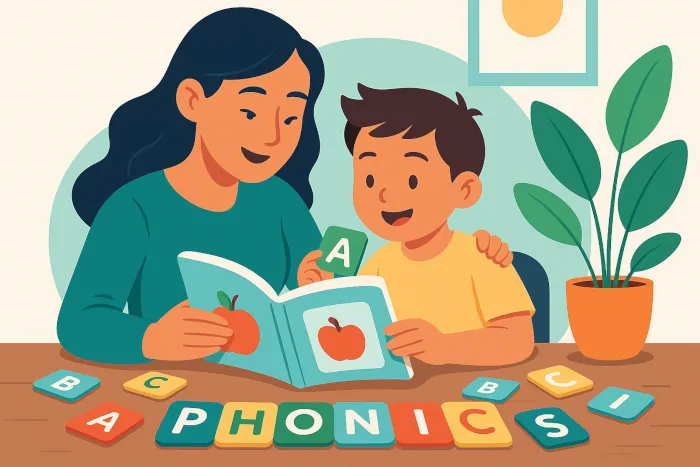
Phonics skills your child will develop
Foundations
- Alphabet knowledge (letter names & sounds)
- Phoneme isolation & manipulation
- Grapheme–phoneme correspondences (GPCs)
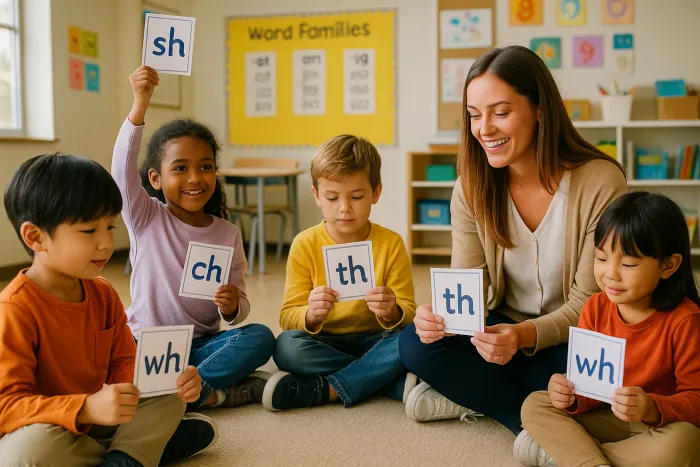
- Short/long vowels; digraphs (sh, ch, th), blends
- Blending & segmenting (CVC → CCVC/CVCC)
- High-frequency / sight words
From decoding to confidence
- Decoding new words using patterns & word families
- Pronunciation & minimal-pair awareness
- Reading fluency & phrasing
- Vocabulary growth through stories & talk
- Motivation via positive reinforcement & games
- Oral expression and show-and-tell readiness
5 Benefits Of Hiring A Phonics Tutor For Your Child
English can be tough for young learners, especially non-native speakers who are still developing the ability to grasp complex concepts and linguistic structures. An easier, proven way to build early-literacy is phonics.
In phonics lessons, children learn to match the sounds of spoken English to individual letters or letter groups. This helps them decode and learn the language faster. You can try phonics at home, but a professional tutor often delivers results more quickly and consistently.
Below are the key ways a dedicated phonics tutor accelerates progress.
-
1) Synthetic method
The most popular approach begins by teaching around 40 sounds in English (varies by dialect) even though there are only 26 letters. Tutors map phonemes to letters/letter groups and show flexible spellings (e.g., the /k/ sound: k, ck, ch, c).
After mastering sound–letter associations, learners blend them to form short, usually one-syllable words. They synthesise sounds into words — hence “synthetic” phonics.
-
2) Analytic phonics
Common in places like Scotland, this method uses curated word sets (e.g., dad, dog, dig). Children analyse the words to find the shared phoneme (onset) and link it to its letter(s), reinforcing pattern recognition without isolating sounds first.
-
3) Analogy-based reading
Once core patterns are learned, tutors help children transfer knowledge to decode new words by analogy — if “oo” in book is /uː/, they can read cook and other simple one-syllable words with the same pattern.
-
4) Positive reinforcement
Young children have a short attention span. Effective tutors maintain motivation with age-appropriate rewards and game-based practice (e.g., sticker goals or quick wins), while balancing push and pause to avoid stress that can negatively affect learning. See ideas: positive reinforcement tools.
-
5) Accurate pronunciation from the start
English has many similar or unique sounds; distinguishing them isn’t easy. A trained tutor models correct pronunciation early, preventing sticky mispronunciations. Reference: BBC Pronunciation.
Tutor City — Singapore’s #1 Phonics Tuition Agency
To conclude, teaching your child English phonics is one of the most beneficial things you can do to ensure their bright future, whichever way you decide to do it.
However if you are after high quality results, delivered in relatively short period of time it is definitely recommended to entrust an experienced private phonics tutor with your child's education.
Teaching phonics is not as easy as it seems at first glance. There are many nuances that should be taken into consideration so, hiring a good private tutor is definitely a worthwhile investment and Tutor City can certainly help you find one.
Google Verified Reviews From Our Clients
FAQ
